
Google Project Zero Will Publish Bug Details 90 Days After Report, Fixed or Not: What Changes for Defenders
From the MAG212 CYBER Daily, 16 November 2026. Facts are sourced below; analysis is marked as MAG212’s.
Status: Confirmed policy. Project Zero published the change on 13 November 2026; Help Net Security reported it on 16 November. [1][2]
What changed
Since 2021 Project Zero has followed a “90 + 30” rule: vendors had 90 days to fix a reported bug, and Project Zero waited up to 30 more days, so the patch could reach users, before publishing technical details. It also had a grace period and a variant policy. [2]
The new policy is called “Full X”: vulnerabilities will be disclosed X days after they are reported to the vendor, whatever the fix status. The schedule is: [1]
| From | Disclosure after report |
|---|---|
| Now | 90 days |
| 2 February 2027 | 60 days |
| 3 January 2028 | 30 days |
The grace period and the variant policy are removed. Severity ratings do not set disclosure dates, and whether a bug is fixed is no longer a decision point; Project Zero will still track fix status and say when a bug remains unfixed. [1][2]
Why this matters
Project Zero reports bugs in the software most organisations run: browsers, operating systems, phones and cloud services. Shorter, fixed disclosure clocks mean more technical detail about unpatched bugs will be public, and less time between a fix and working exploits. (MAG212 analysis)
Exceptions
- Bugs exploited in the wild are handled under Google’s separate application security vulnerability disclosure policy, not this timeline. [1]
- Project Zero may publish early if someone else has already published the details, or if the vendor asks it to. [1]
- Hardware bugs may occasionally get more time, as Spectre and Meltdown did. [1][2]
Why Project Zero says it is doing this
The team says large language models help attackers find and exploit bugs faster, and make it more likely that several parties, including malicious ones, find the same bug during an embargo. It now treats near-zero patch-to-exploit time as a reasonable model of attacker behaviour, and argues the extra month gave users a false sense of secrecy. It also finds several vulnerabilities a week, and negotiating fix status and grace periods had become unmanageable. [2]
Vendors told Project Zero they were worried that a sudden change would expose unfixed bugs, that deadlines could distort fix priorities and that some would give up on hard deadlines. The team calls its staged schedule “challenging but realistic.” [2]
What it means for defenders (MAG212 analysis)
- Patch faster after a fix ships. The 30-day buffer after a patch is gone. Plan for technical details to be public soon after, or even before, a fix.
- Expect some public details of unfixed bugs. When a vendor misses the deadline, Project Zero will publish anyway and say the bug is unfixed. Your response then is mitigation and exposure reduction, not patching.
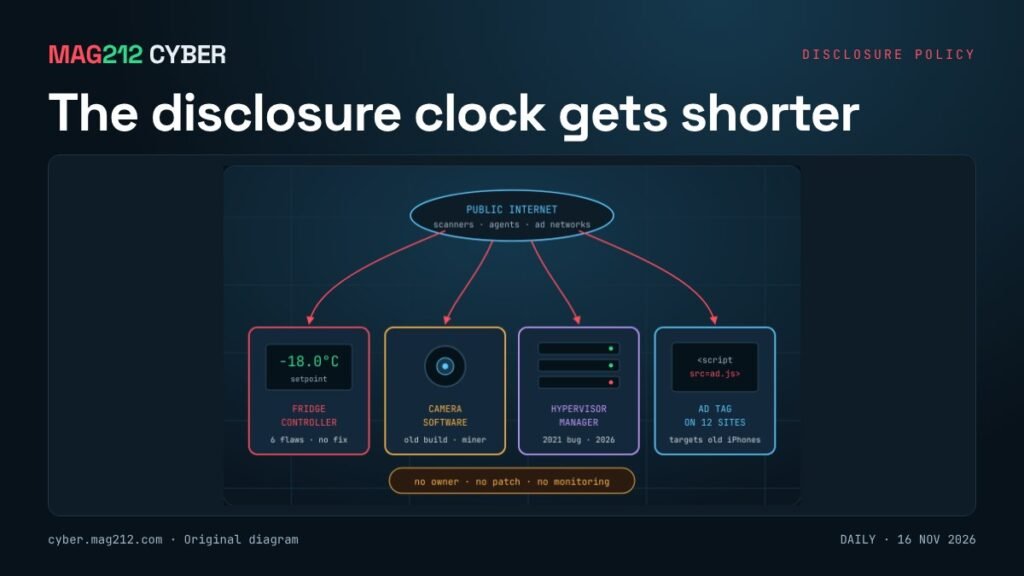
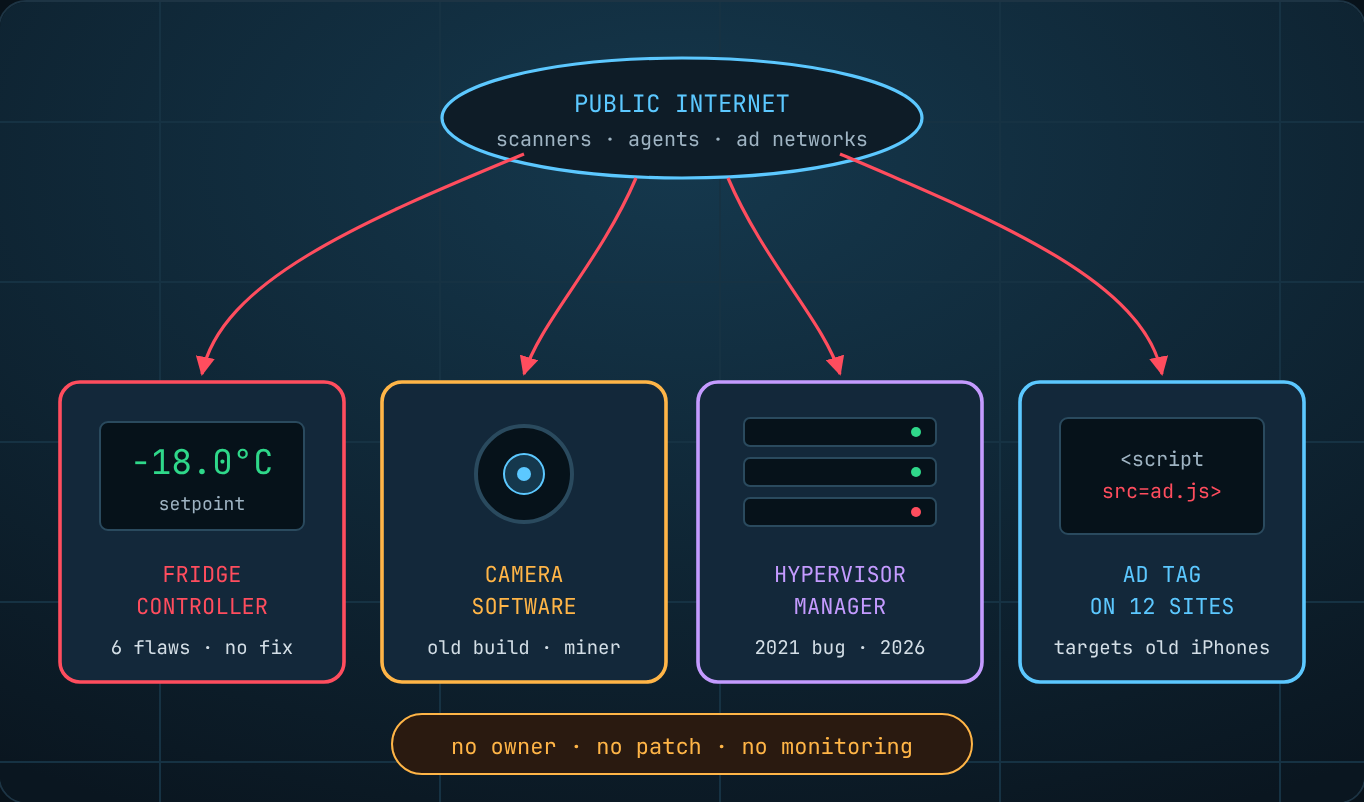
- Know what you run. You can only act on a disclosure quickly if you know which products and versions you have, including appliances and “boxes” outside IT.
- Watch vendor posture. A vendor that repeatedly misses deadlines is a risk signal for procurement.
Who is affected
Every organisation that runs software from vendors Project Zero researches, which includes major browsers, operating systems, mobile platforms and widely used open-source projects.
What to do now
- Review your patch service-level targets for critical client and server software; aim for days, not weeks, for internet-facing and widely exploited product families.
- Subscribe to Project Zero’s issue tracker and blog alongside vendor advisories.
- Keep an accurate software inventory so a disclosure can be matched to affected systems quickly.
- Prepare mitigation playbooks (disable a feature, block a protocol, isolate a host) for when a detail is public before a patch.
Related on MAG212 CYBER
- MAG212 CYBER Daily, 16 November 2026: The boxes nobody patches (full issue and PDF)
- MAG212 CYBER Daily, 15 November 2026: Machine speed, human gaps
- MAG212 CYBER Weekly, 14 November 2026
- Subscribe free to MAG212 CYBER
Sources
- [1] Google Project Zero, “Disclosure policy update (Full X)“, 13 Nov 2026.
- [2] Help Net Security, “Google Project Zero will disclose bugs after 90 days, fixed or not“, 16 Nov 2026.
Written and edited by El Mostafa Ouchen for MAG212 CYBER. Facts checked against the sources above as of 16 November 2026, 6:00 AM PT.